📋 Table of Contents
▼

Table of Contents
 Searching for unclaimed money is not a difficult process, but it can be time consuming. Montana has an easy-to-use database that makes in state searching simple. They also participate in the Missing Money database. Whether you are using the Missing Money database or Montana’s own database, the process for the search is similar from state-to-state. Once you have figured out how to handle searches in one state, you can use those same skills to run searches in other states. Also, because you can go directly to the Missing Money website, you can run simultaneous searches in Montana and several other states. However, if you find yourself needing additional information or help to run unclaimed property searches in other states, check our tutorials site; we have been adding new tutorials to make your unclaimed property searches easier.
Beginning an unclaimed property search in Montana is as simple as going to the state’s unclaimed property database. You can search for unclaimed property by searching for first name, last name, or business name. We will provide you with a step-by-step tutorial that shows you exactly what you need to do to find abandoned property and then file a claim for that property. We also do our best to answer any questions you might have in our frequently asked questions section. Topics we include are the websites and links you need for Montana’s unclaimed property database, how to find Montana’s unclaimed property laws, the definition of a finder service, and whether you need to use a finder service.
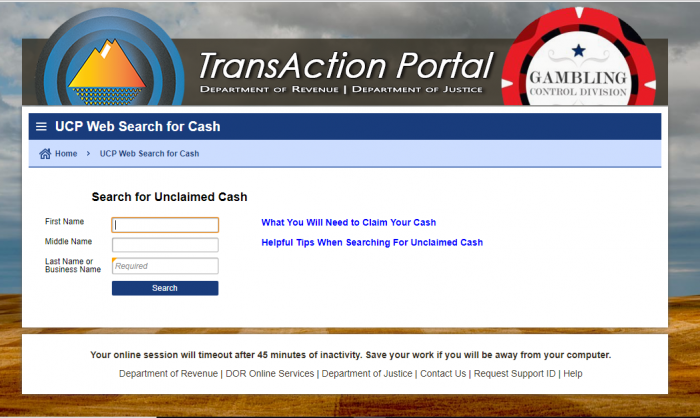
You can find Montana’s unclaimed property page at the state’s transaction portal, and clicking on the option to search for unclaimed property.
Searching for unclaimed money is not a difficult process, but it can be time consuming. Montana has an easy-to-use database that makes in state searching simple. They also participate in the Missing Money database. Whether you are using the Missing Money database or Montana’s own database, the process for the search is similar from state-to-state. Once you have figured out how to handle searches in one state, you can use those same skills to run searches in other states. Also, because you can go directly to the Missing Money website, you can run simultaneous searches in Montana and several other states. However, if you find yourself needing additional information or help to run unclaimed property searches in other states, check our tutorials site; we have been adding new tutorials to make your unclaimed property searches easier.
Beginning an unclaimed property search in Montana is as simple as going to the state’s unclaimed property database. You can search for unclaimed property by searching for first name, last name, or business name. We will provide you with a step-by-step tutorial that shows you exactly what you need to do to find abandoned property and then file a claim for that property. We also do our best to answer any questions you might have in our frequently asked questions section. Topics we include are the websites and links you need for Montana’s unclaimed property database, how to find Montana’s unclaimed property laws, the definition of a finder service, and whether you need to use a finder service.
You can find Montana’s unclaimed property page at the state’s transaction portal, and clicking on the option to search for unclaimed property.
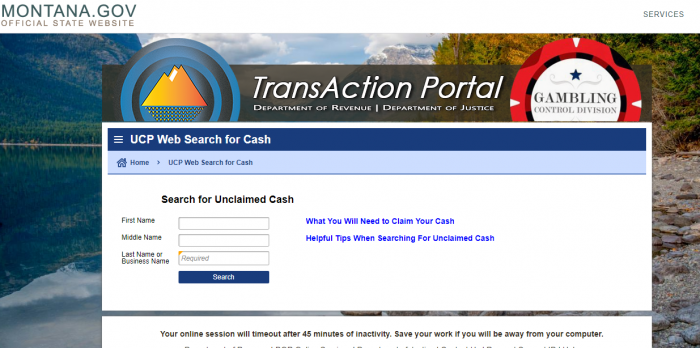 You can also go directly to the Missing Money website. If you want to search specifically for money from Montana, you can include your state abbreviation in the search box:
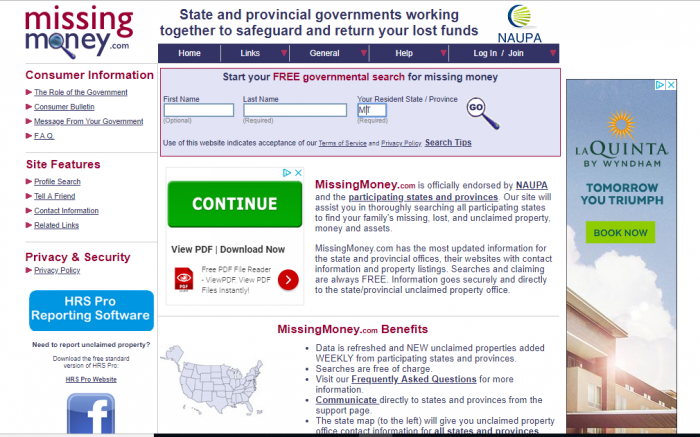 While you can search on the Missing Money database, this tutorial will focus specifically on the state’s own search portal.
Montana’s Unclaimed Property Database
Before the creation of statewide unclaimed property databases, searching for lost property was still possible, but was much more time-consuming. At that time, most counties had their own versions of unclaimed property databases, though individual property holders in the counties usually retained possession of the property. Now, the states handle a single database that manages all of the counties. That means that, in Montana, searching the unclaimed property database lets you simultaneously examine unclaimed money records in the following counties: Beaverhead, Big Horn, Blaine, Broadwater, Carbon, Carter, Cascade, Chouteau, Custer, Daniels, Dawson, Deer Lodge, Fallon, Fergus, Flathead, Gallatin, Garfield, Glacier, Golden Valley, Granite, Hill, Jefferson, Judith Basin, Lake, Lewis and Clark, Liberty, Lincoln, Madison, McCone, Meagher, Mineral, Missoula, Musselshell, Park, Petroleum, Phillips, Pondera, Powder River, Powell, Prairie, Ravalli, Richland, Roosevelt, Rosebud, Sanders, Sheridan, Silver Bow, Stillwater, Sweet Grass, Teton, Toole, Treasure, Valley, Wheatland, Wibaux, Yellowstone, and Yellowstone National Park.What is Unclaimed Property?
The name unclaimed property can be a little misleading, because it somewhat suggests that the money does not have an owner. On the contrary, with unclaimed property, property not only has an owner, but that owner is actually identified. However, the third-party holder of the property, which is usually a bank or other financial institution, but can be any organization that holds money for another, has lost contact with the property’s identified owner. For example, in addition to banks, business associations, corporations, utility companies, and insurance companies are all frequent holders. Unclaimed property can appear in a number of different formats, including: savings accounts, checking accounts, bonds, stocks, mutual funds, life insurance payments, insurance refunds, utility refunds, and even small tangible items that are stored in safety deposit boxes. However, other types of property, like real property and motor vehicles, are specifically exempted from unclaimed property programs. In order for property to be considered unclaimed, the holder must be unable to locate the actual property owner. When this happens, the property is considered abandoned. For property to be abandoned, there does not have to be an intentional effort to abandon the property by the property owner. Instead, all that it requires is that the property owner lose contact with the holder. This is generally the result of accident or oversite; the property owner may move or change contact information and neglect to tell the holder. This may also happen because the property owner dies and fails to tell heirs about the location or the property or even due to simple transcribing errors by the holder. Each state has a statutory time period for non-contact, and after that time period expires, the property can be considered unclaimed.How Much Unclaimed Property in Montana?
In 2018, Montana received $8.3 million in unclaimed property, but only paid out $3.4 million in claims. That is why the unclaimed property database tends to continue to grow. In a smaller state like Montana, the total amount may remain relatively small, but when you look at the amount of unclaimed property in the whole country, the significance becomes apparent. The National Association of Unclaimed Property Administrators (NAUPA), a group that is committed to helping owners reunite with their abandoned property, estimates that there is more than $42 billion in unclaimed property available in the entire United States.Montana Unclaimed Property Finder
Start your Montana unclaimed property search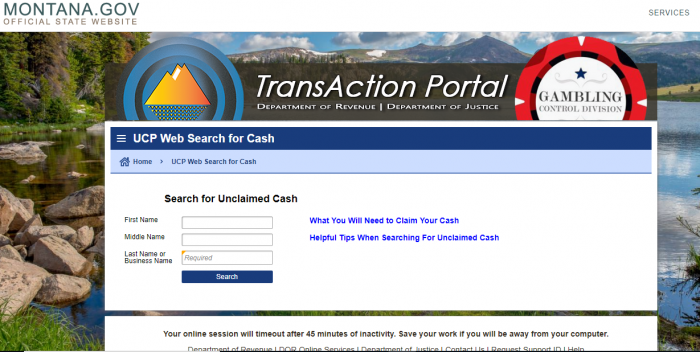 Montana’s search does not give you the ability to narrow down your search significantly; you can only begin your search with first name, middle name, and last name or business name. You can run a search with only a last name or business name.
As with our other tutorials, we are going to use the name “Bob Smith” for this tutorial. We use the same name across all our tutorials so that you can compare the process from state-to-state. We have also intentionally chosen a very common name because there are some pitfalls that come when a name is too-common for searches, and we want to highlight them in our tutorials to help people avoid them in their own searches.
We start our search by last name only. Here are our search results for “Smith” in the last name section:
Montana’s search does not give you the ability to narrow down your search significantly; you can only begin your search with first name, middle name, and last name or business name. You can run a search with only a last name or business name.
As with our other tutorials, we are going to use the name “Bob Smith” for this tutorial. We use the same name across all our tutorials so that you can compare the process from state-to-state. We have also intentionally chosen a very common name because there are some pitfalls that come when a name is too-common for searches, and we want to highlight them in our tutorials to help people avoid them in their own searches.
We start our search by last name only. Here are our search results for “Smith” in the last name section:
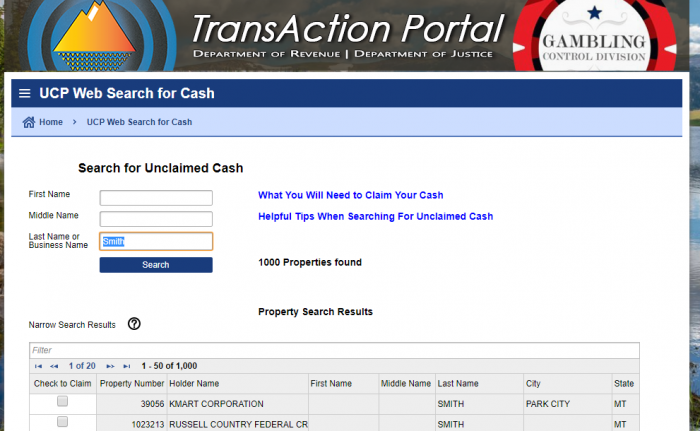 It tells us that 1,000 properties have been found. However, 1,000 is a frequent cut-off point for the number of properties that can be returned in any single search, which immediately alerts us that our search might not actually return all relevant results. Therefore, we need to narrow it down by adding the first name Bob to our search:
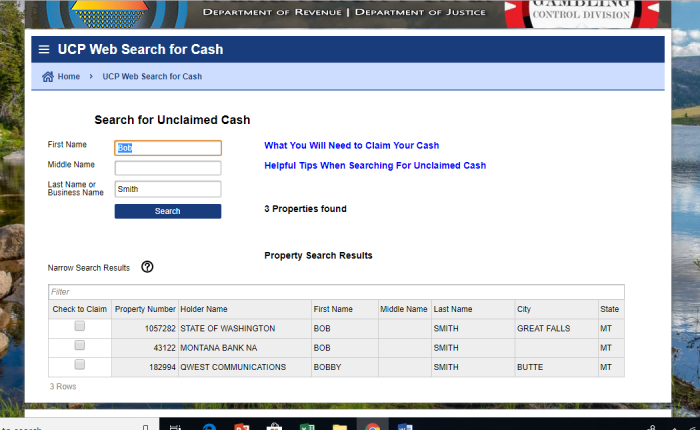 Adding the first name is wonderful, because it narrows down our search results to three possibilities. However, if you are searching for a name like Bob, which is frequently used as a shortened version or “nickname” for other names, you might want to search for those names as well. For example, Bob is a nickname for Robert. Searching for Robert Smith increases search results to 44 results, and the Bob Smith results are not included in those results. This is just a reminder that you may need to run multiple searches if a person had a nickname and a legal name, used multiple different names, or used a shortened version of his or her name:
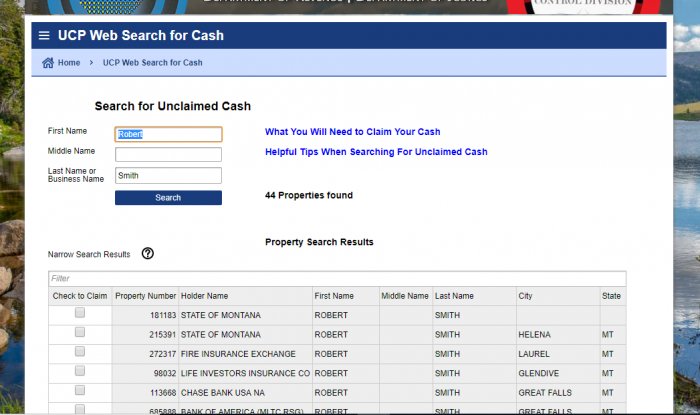 As you can see, the search results give you a property number, a holder name, the first name of the owner, the middle name if known, the last name, and the city and state of the owner’s last known address. They also have a box that you can check to claim. When you check a property, a box pops up that will allow you to add the checked property to your cart:
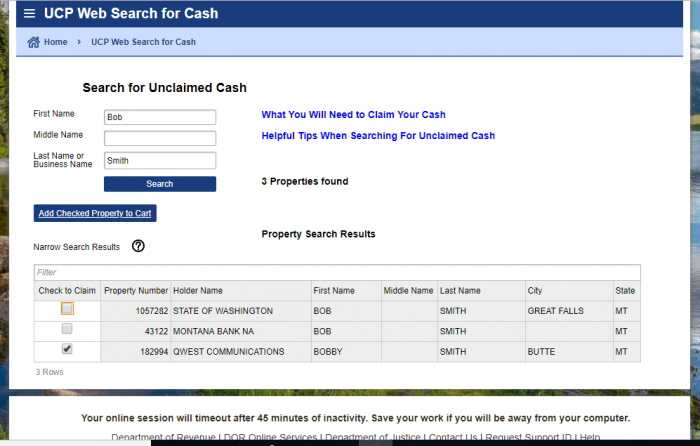 Adding the checked property to the cart, pulls up a screen that asks you questions about whether you have the right to claim the property. You can choose ok or cancel from that screen:
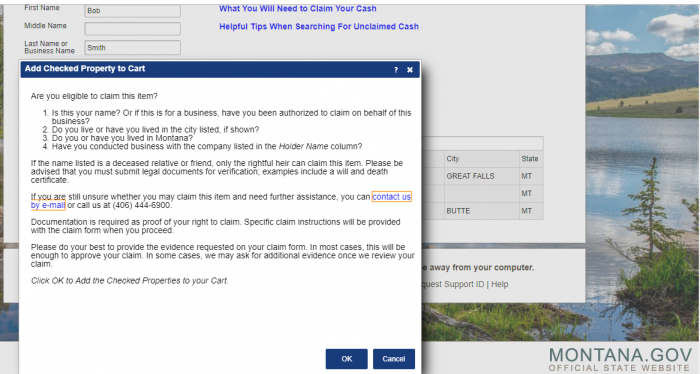 If you select ok, then the property is added to your cart:
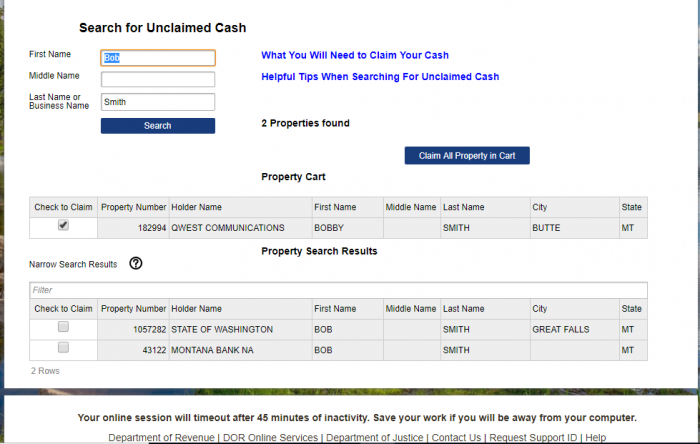 To claim the property, you hit the button that says “claim all property in cart.” This takes you to a screen that tells you five easy steps to claim your property:
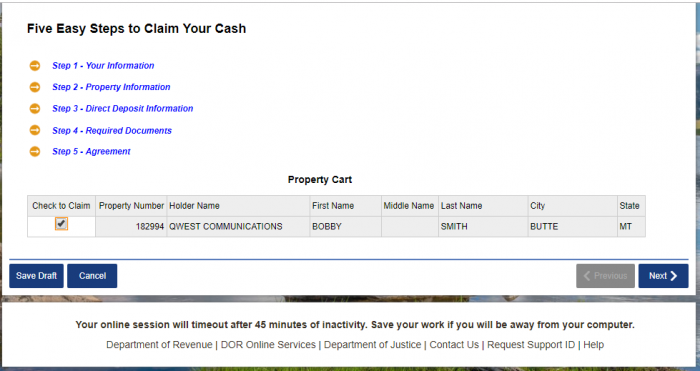 You will be asked to provide information about yourself to move forward with your claim:
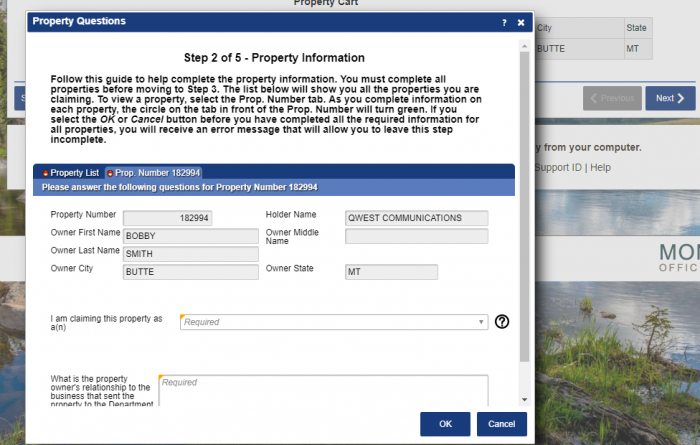
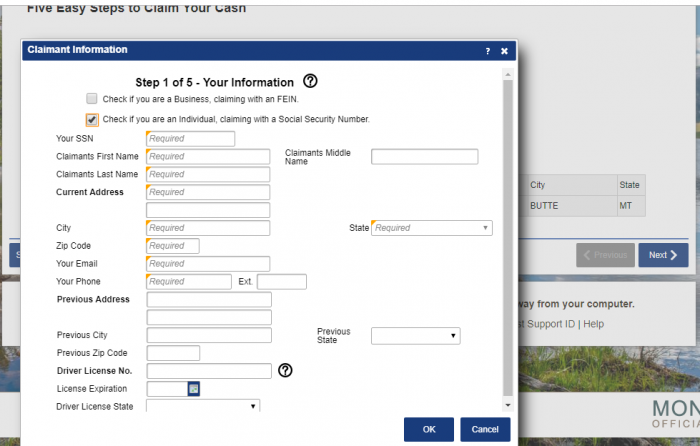 Then, you will be asked to fill out information for each property:
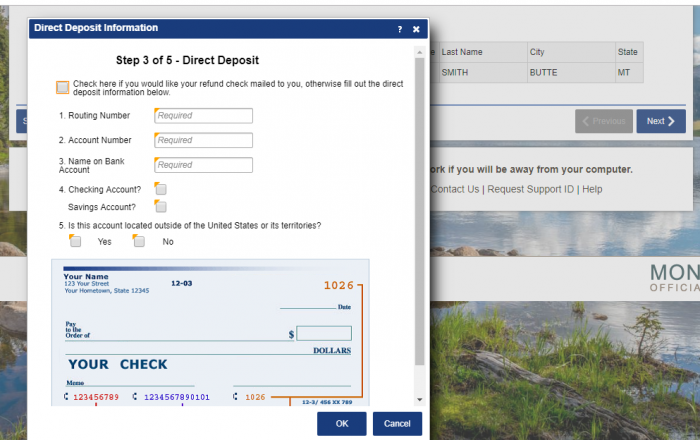
 You will be given the option to fill out direct deposit information if you want the money directly deposited instead of mailed by check:
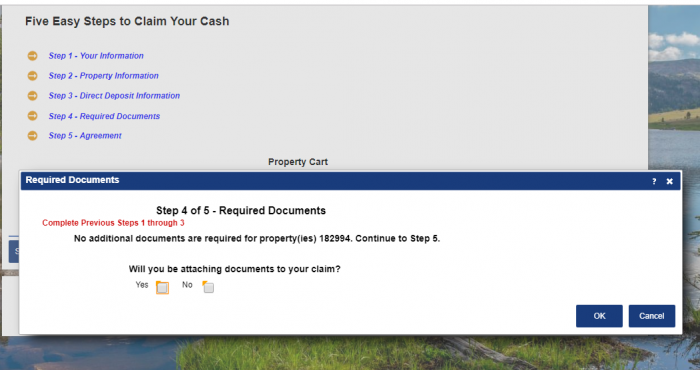
 When you click on step 4, required documents, the website will tell you if there are documents required for your claim, and, if so, what they are. You can also attach documents from this link:
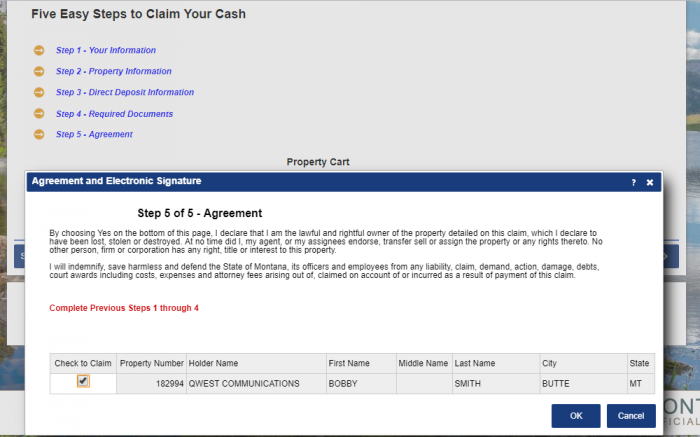
 Finally, you have to agree that you are the lawful claimant for the property you have selected:
Unclaimed Property Laws in Montana
The Montana Uniform Unclaimed Property Act is located in Montana Code Annotated, Title 70, Chapter 9, Part 8.Montana Unclaimed Property FAQ
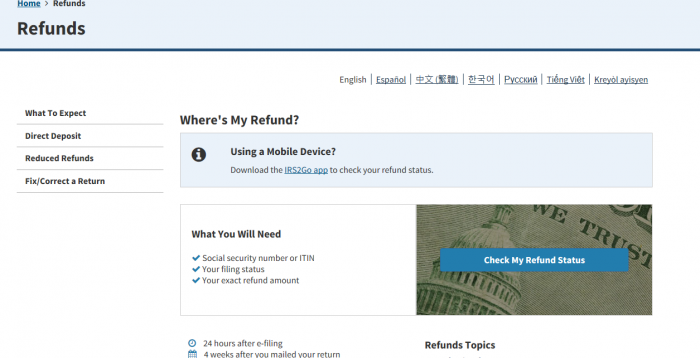
How long does Montana hold unclaimed money? Montana holds property indefinitely for property owners and their heirs. Examples of Unclaimed Money While any type of intangible personal property can be considered abandoned money, the most common examples are: dividends, cash, checking account contents, savings account contents, utility deposits, insurance benefits, unpaid wages, unpaid royalties, stocks, bonds, and mutual funds. Does the state of MT make efforts to locate owners? Montana does not have an extensive statewide outreach program. Other sources to search besides MT state database? Many people mistakenly believe that all they need to do to find unclaimed property is to look in the database for the state where they currently reside. However, the whole point of the unclaimed property databases is that the holders are unable to locate you; they may not know the state where you currently reside. That is why most people need to search in multiple states and even look at some federal databases to run a comprehensive unclaimed property search. Your search should include any states where you have resided or where anyone who may have put property in your name resided. In addition, there are some national-level sites we suggest everyone search, as well as some specific sites that might apply to your individual circumstances. The four national level sites we suggest that almost everyone search are: the Internal Revenue Service (IRS), the Pension Benefit Guaranty Corporation, the U.S. Treasury, and the Life Insurance Policy Locator. You may not think of the IRS as a source for unclaimed property, but most people pay taxes, and many people are entitled to refunds. The IRS will not forward a tax refund check if it is undeliverable. In addition, it never turns over unpaid refunds to the state. You can find out more information about this policy at the IRS website: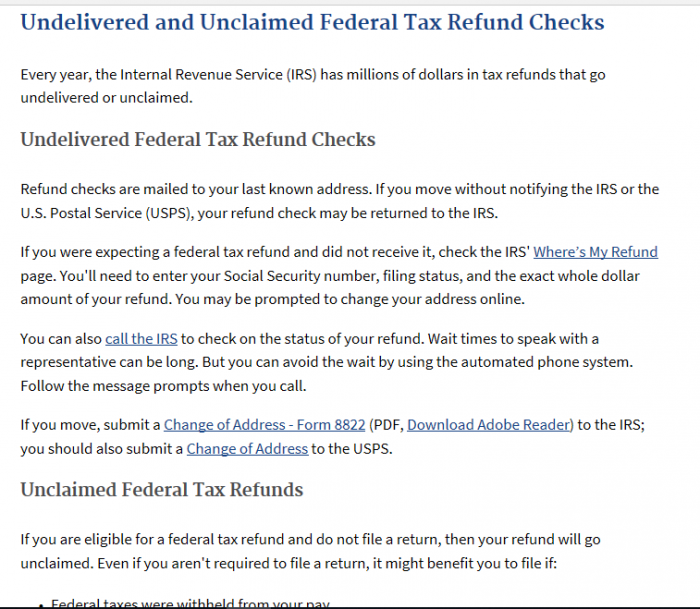 The IRS has even set up a page to help you track down your tax refund if you think it is missing. It is called the Where’s My Refund? page:
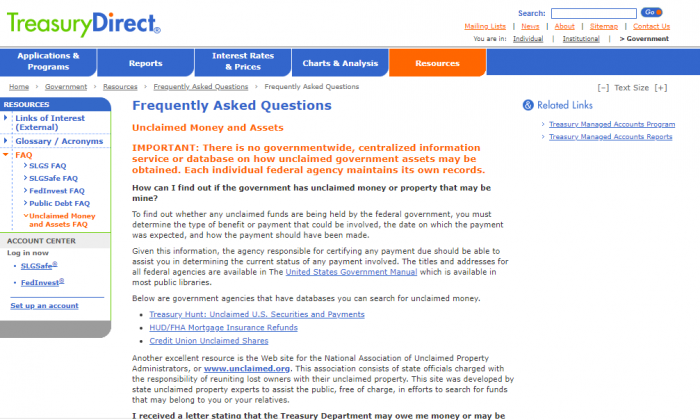
 Another popular source of unclaimed money at the federal level is the US Treasury. This is because, not only are savings bonds popular, but they are often purchased for people by others on significant occasions, such as births or graduations. Many people may have savings bonds and not even realize it. The U.S. Treasury used to have an easily searchable database, which made finding abandoned bonds relatively simple. For some reason, they discontinued this process, which has made finding and claiming bonds more difficult. However, you can still call them at 844-284-2676 or visit Treasury Direct for more information:
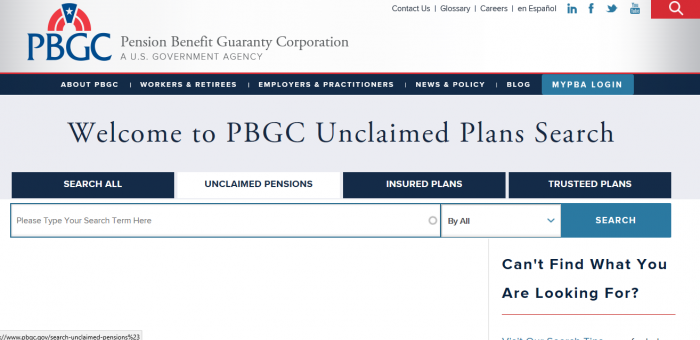
 If you do not realize that there is a federal organization that guarantees private pension benefits, you are not alone. However, the Pension Benefit Guaranty Corporation (PBGC) is that organization and it runs an unclaimed pension database:
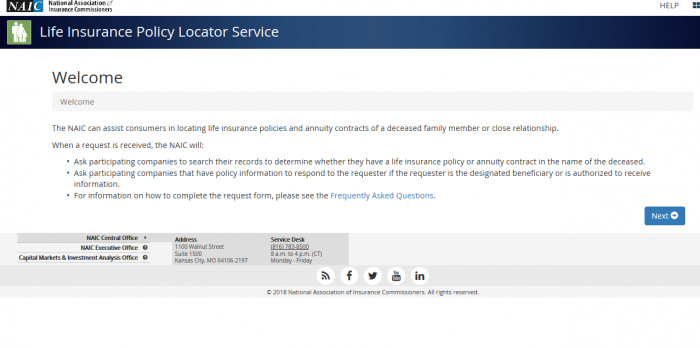
 All of the above sites are either run by or directly affiliated with the federal government. However, there are some national sites worth checking for unclaimed property, even though they have no government affiliation. One of those sites is the National Association of Insurance Commissioners’ Life Insurance Policy Locator Service. This industry-run service consists of a conglomeration of life insurance policy providers. While it does not have a searchable database, it allows you to submit your information, which it distributes to its members, so that they can check and see if you are a beneficiary on any of their unpaid policies:
 The four sites we discussed in depth are ones that we think every person should check when looking for abandoned property. There are some more sites that might apply, depending on your individual circumstances. They include: the FDIC, the Department of Housing and Urban Development, the National Credit Union Administration, and the Veterans Administration Benefits Department.
What is the best way prevent my property from becoming lost or unclaimed?
One of our most frequently asked questions is how to keep your property from being declared abandoned and labeled unclaimed. The way to do this is to keep in contact with your holders, provide them with any changes in your contact information, and reach out to them on a regular (usually yearly) basis. To help you do this, we suggest keeping very detailed account records that have information about all of your accounts and also using electronic account management when it is an option.
How do I make sure my heirs know where my assets are if I die?
Do not rely on your will to tell your heirs where assets are located. Instead, you should choose a trusted individual to have access to all of your financial information in the event you die or are incapacitated.
Should I hire a finder to conduct the search?
This may be the second most frequently asked question that we get. Searching for and claiming property is free, while finders charge a fee. Therefore, from a purely economic standpoint, hiring a finder does not seem like a good idea. However, searches can be time consuming. If you would not run your own search, then paying a finder’s fee may be the price you pay to recover your abandoned property.
Why does Montana take possession of unclaimed property?
Montana’s unclaimed property program has two purposes. First, it generates revenue for the state, which can use unclaimed property to generate money until the property is claimed. Second, it serves as a consumer protection statute and helps reunite owners with their lost property.
The four sites we discussed in depth are ones that we think every person should check when looking for abandoned property. There are some more sites that might apply, depending on your individual circumstances. They include: the FDIC, the Department of Housing and Urban Development, the National Credit Union Administration, and the Veterans Administration Benefits Department.
What is the best way prevent my property from becoming lost or unclaimed?
One of our most frequently asked questions is how to keep your property from being declared abandoned and labeled unclaimed. The way to do this is to keep in contact with your holders, provide them with any changes in your contact information, and reach out to them on a regular (usually yearly) basis. To help you do this, we suggest keeping very detailed account records that have information about all of your accounts and also using electronic account management when it is an option.
How do I make sure my heirs know where my assets are if I die?
Do not rely on your will to tell your heirs where assets are located. Instead, you should choose a trusted individual to have access to all of your financial information in the event you die or are incapacitated.
Should I hire a finder to conduct the search?
This may be the second most frequently asked question that we get. Searching for and claiming property is free, while finders charge a fee. Therefore, from a purely economic standpoint, hiring a finder does not seem like a good idea. However, searches can be time consuming. If you would not run your own search, then paying a finder’s fee may be the price you pay to recover your abandoned property.
Why does Montana take possession of unclaimed property?
Montana’s unclaimed property program has two purposes. First, it generates revenue for the state, which can use unclaimed property to generate money until the property is claimed. Second, it serves as a consumer protection statute and helps reunite owners with their lost property.
Conclusion
With more money coming into Montana’s unclaimed property program each day, there could be money waiting there for you. Go search today!Search Unclaimed Money in Other States
Looking for unclaimed money in a different state? Browse all 50 states below to find unclaimed property in your area.
ALAlabamaAKAlaskaAZArizonaARArkansasCACaliforniaCOColoradoCTConnecticutDEDelawareFLFloridaGAGeorgiaHIHawaiiIDIdahoILIllinoisINIndianaIAIowaKSKansasKYKentuckyLALouisianaMEMaineMDMarylandMAMassachusettsMIMichiganMNMinnesotaMSMississippiMOMissouriNENebraskaNVNevadaNHNew HampshireNJNew JerseyNMNew MexicoNYNew YorkNCNorth CarolinaNDNorth DakotaOHOhioOKOklahomaOROregonPAPennsylvaniaRIRhode IslandSCSouth CarolinaSDSouth DakotaTNTennesseeTXTexasUTUtahVTVermontVAVirginiaWAWashingtonWVWest VirginiaWIWisconsinWYWyoming