📋 Table of Contents
▼
- 1. Hawaii’s Unclaimed Property Database
- 2. What is Unclaimed Property?
- 3. How Much Unclaimed Property in Hawaii?
- 4. Hawaii Unclaimed Property Finder
- 5. Unclaimed Property Laws in Hawaii
- 6. Hawaii Unclaimed Property FAQ
- 7. Conclusion
- 8. What is Unclaimed Property?
- 9. How Does Property Become Unclaimed?
- 10. How Much Unclaimed Money is in the United States?
- 11. Before You Begin
- 12. How to Find Unclaimed Money
- 13. Conclusion
- 14. What is Unclaimed Money?
- 15. The Scope of Unclaimed Money in Texas
- 16. How to Locate Unclaimed Money in Texas
- 17. Claiming Your Unclaimed Money in Texas
- 18. Tips for a Successful Claim
- 19. Preventing Unclaimed Money
- 20. Conclusion
Table of Contents
- Hawaii’s Unclaimed Property Database
- What is Unclaimed Property?
- How Much Unclaimed Property in Hawaii?
- Hawaii Unclaimed Property Finder
- Unclaimed Property Laws in Hawaii
- Hawaii Unclaimed Property FAQ
- Conclusion
- What is Unclaimed Property?
- How Does Property Become Unclaimed?
- How Much Unclaimed Money is in the United States?
- Before You Begin
- How to Find Unclaimed Money
- Conclusion
- What is Unclaimed Money?
- The Scope of Unclaimed Money in Texas
- How to Locate Unclaimed Money in Texas
- Claiming Your Unclaimed Money in Texas
- Tips for a Successful Claim
- Preventing Unclaimed Money
- Conclusion
 Starting an unclaimed property search in Hawaii begins at Hawaii’s unclaimed property database. In this tutorial, we take you step-by-step through the unclaimed money process. This tutorial will show you everything you need to know about running an unclaimed property search and filing a claim for that property. In addition, we answer some other frequently asked questions, like the websites and links you need to find Hawaii’s unclaimed property database, information and links to Hawaii’s unclaimed/ abandoned property laws, some information about finder services and whether finder services are permitted.
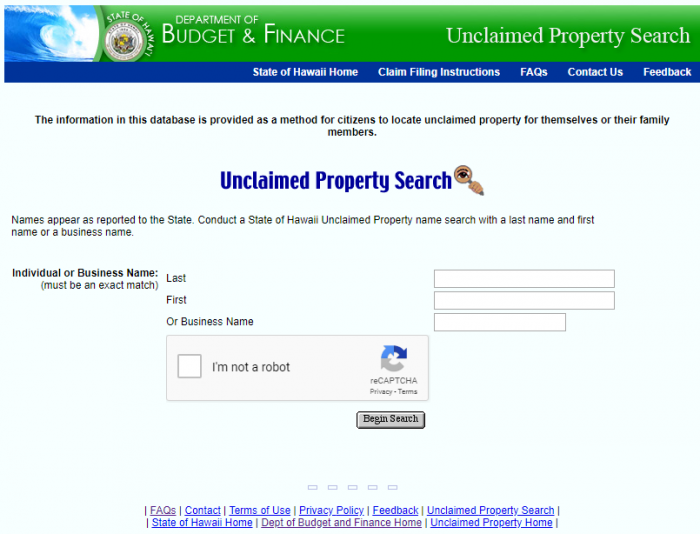
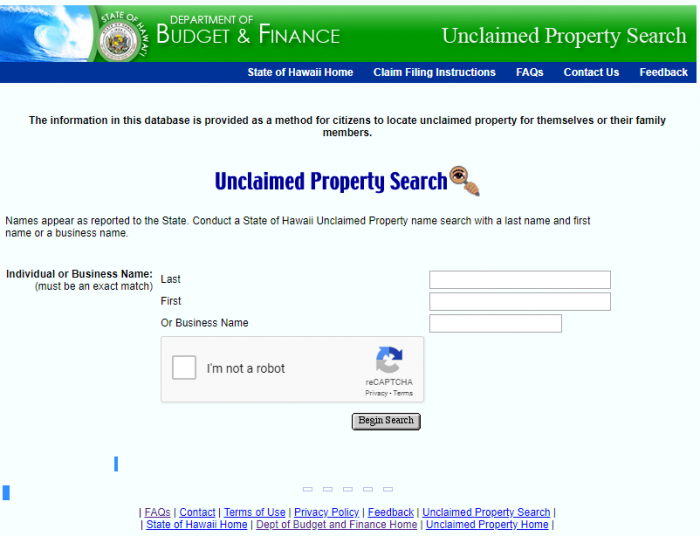
Hawaii’s unclaimed property page is located on the website at the Department of Budget and Finance.
Starting an unclaimed property search in Hawaii begins at Hawaii’s unclaimed property database. In this tutorial, we take you step-by-step through the unclaimed money process. This tutorial will show you everything you need to know about running an unclaimed property search and filing a claim for that property. In addition, we answer some other frequently asked questions, like the websites and links you need to find Hawaii’s unclaimed property database, information and links to Hawaii’s unclaimed/ abandoned property laws, some information about finder services and whether finder services are permitted.
Hawaii’s unclaimed property page is located on the website at the Department of Budget and Finance.
Hawaii’s Unclaimed Property Database
Even before states created unclaimed property databases, it as theoretically possible to do comprehensive statewide unclaimed property searches. However, that often meant searching in individual county unclaimed property databases or watching for that time of year that holders would be required to publish lists of property owners for whom they were holding abandoned property. In a state like Hawaii, which actually has very few county-like subdivisions, these searches were never incredibly burdensome. However, now you can run a state-wide search that simultaneously examines the following states: Hawaii, Honolulu, Kalawao, Kauai, and Maui.What is Unclaimed Property?
The name unclaimed property can be a little misleading, because it somewhat suggests that the money does not have an owner and is ready to be claimed by anyone. This is not what the term means at all. Unclaimed money is described by a number of different names: unclaimed money, unclaimed property, abandoned money, and abandoned property. All of the terms mean the same thing. It does not refer to money that has no owner and is available for anyone to claim. Instead, it refers to property that has an identified owner, but the holder that has custody of the property is unable to locate the owner. Holders are third-parties that do not have ownership of the property, but do have custody of the property for some reason. Usually, holders are financial organizations, such as banks, but may be other businesses, like utility companies, which may hold deposits for others. Some examples of holders include banks, corporations, insurance companies, utility companies, and business associations. However, any business that holds money for another party could function as a holder. Unclaimed money can be any type of intangible personal property. Intangible personal property generally refers to the type of property that can be easily converted to cash. Some examples of intangible personal property include: the money in savings or checking accounts, stocks, bonds, mutual funds, uncashed checks, unpaid wages, insurance benefits, refunds, rebates, traveler’s checks, and even some personal property held in safety deposit boxes. Two big types of property are generally exempted from the state’s unclaimed property laws: real property and motor vehicles. Before the property can be considered abandoned or unclaimed, it has to be identified as unclaimed money by the holder. This happens after the holder loses contact with the property owner for a period of time defined by statute. The amount of time may vary with the type of property and does vary from state to state. Usually, property is not intentionally abandoned. Instead, most property that is identified as abandoned would probably be better described as forgotten property. Generally, people forget about the property and neglect to give the holder information when their contact information changes. For example, they often fail to tell the holders about name changes, address changes, and changes in phone numbers. Another way property becomes abandoned is when the property owner dies and the heirs do not know about the property and cannot claim it.How Much Unclaimed Property in Hawaii?
Hawaii has over $150 million in unclaimed funds, waiting to be claimed by the rightful owners. While this may seem like a very large amount, it is actually small when compared to states with larger populations. In addition, it is only a small fraction of the amount of total unclaimed money available in the United States. According to a group devoted to helping people locate their unclaimed money, the National Association of Unclaimed Property Administrators (NAUPA), there is more than $42 billion in unclaimed property currently available in the entire United States.Hawaii Unclaimed Property Finder
Hawaii’s Unclaimed Property Finder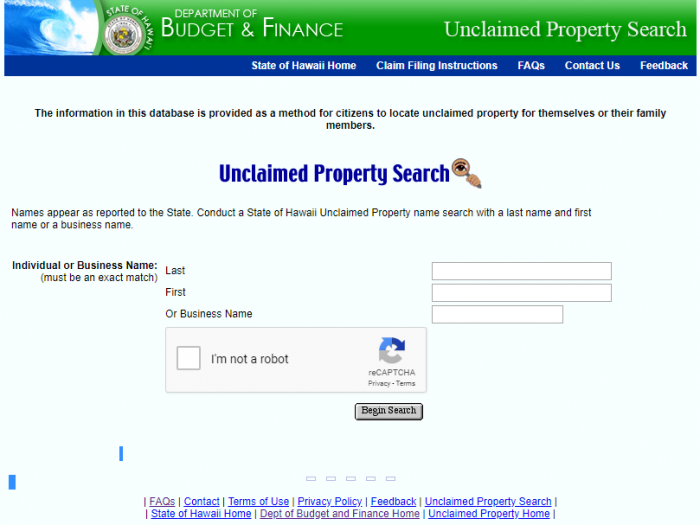 Like the search engines for many smaller states, Hawaii’s initial search does not allow you to narrow down the search elements significantly. Instead, you can only search by name. You can search by last name, first name, or business name. The names must be exact matches to the terms you enter.
In all of our tutorials, we use the same name to show our examples. We do this to provide continuity and make it easier for users to compare and contrast similarities and differences in the different state search processes. We selected the very common name “Bob Smith” as the name we would use in our tutorials. This name is very common, which can result in getting too many search results when you begin the search process. We are aware of this flaw, and have chosen a common name on purpose. It is to help users understand the steps that you can take to narrow down search results if your initial search parameters yield too many search results.
Because we believe we have the option to search only by last-name, that is how we begin our search. We start our search by last name only. However, it immediately becomes apparent that Hawaii does not support a last-name only search. Instead, if you are searching for an individual, you are instructed to enter a first name for your search:
Like the search engines for many smaller states, Hawaii’s initial search does not allow you to narrow down the search elements significantly. Instead, you can only search by name. You can search by last name, first name, or business name. The names must be exact matches to the terms you enter.
In all of our tutorials, we use the same name to show our examples. We do this to provide continuity and make it easier for users to compare and contrast similarities and differences in the different state search processes. We selected the very common name “Bob Smith” as the name we would use in our tutorials. This name is very common, which can result in getting too many search results when you begin the search process. We are aware of this flaw, and have chosen a common name on purpose. It is to help users understand the steps that you can take to narrow down search results if your initial search parameters yield too many search results.
Because we believe we have the option to search only by last-name, that is how we begin our search. We start our search by last name only. However, it immediately becomes apparent that Hawaii does not support a last-name only search. Instead, if you are searching for an individual, you are instructed to enter a first name for your search:
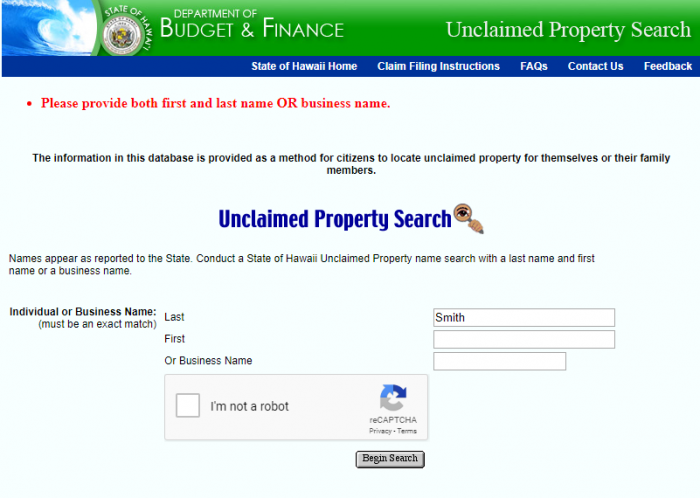 The results tell us that we need to provide both first and last name or a business name for the individual. Because entering a last name only gives us no results, we need to enter in the first name Bob to see what results we get for our search:
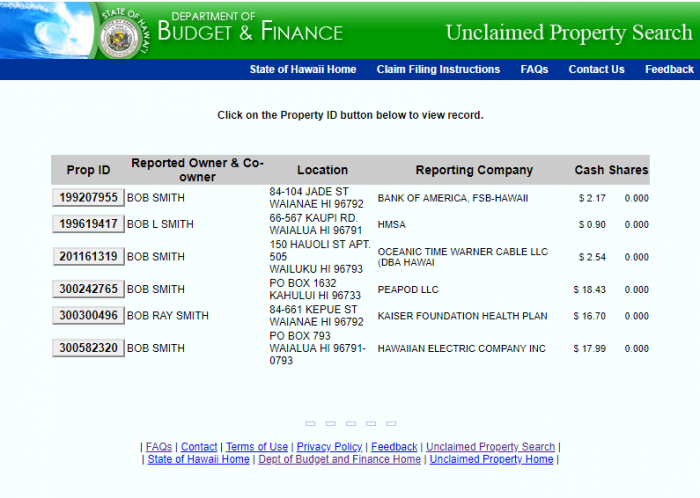 This results in just a small handful of search possibilities, which means it is really easy to look through the results and determine whether or not they match your search. There is, however, one problem with the Hawaii unclaimed property search engine; it only provides exact matches. Look through the results, you can see that the only results are for Bob. It will not include any other names, such as Bobby or Robert. For a name like Bob, which is frequently a nickname for longer names, you would have to search for the longer names as well if you want to ensure that you are not eliminating potential search results. Adding the first name is wonderful, because it narrows down our search results to three possibilities. However, if you are searching for a name like Bob, which is frequently used as a shortened version or “nickname” for other names, you might want to search for those names as well. For example, Bob is a nickname for Robert. Searching for Robert Smith increases search results tremendously:
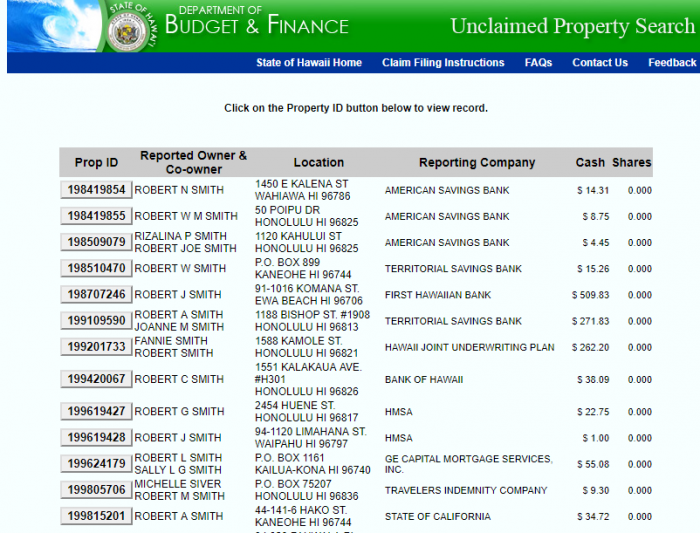 In our example, we ran searches for Bob and for Robert, but you would also want to run searches for the name Bobby or any other nickname that you know the person would have used. Keep in mind that some people also go only by their initials, so you might want to search for B Smith or for R Smith.
Looking at the search results, you can see that each results has a property id number, a reported owner (and co-owner when one exists), the location (the last known address for the property owner), the reporting company, the cash amount of the claim, and the shares in the claim.
Most unclaimed property search engines have a claim button next to their claims. Hawaii does not. To begin a claim, you click on the property id button. When you do, you get a page with the following results:
In our example, we ran searches for Bob and for Robert, but you would also want to run searches for the name Bobby or any other nickname that you know the person would have used. Keep in mind that some people also go only by their initials, so you might want to search for B Smith or for R Smith.
Looking at the search results, you can see that each results has a property id number, a reported owner (and co-owner when one exists), the location (the last known address for the property owner), the reporting company, the cash amount of the claim, and the shares in the claim.
Most unclaimed property search engines have a claim button next to their claims. Hawaii does not. To begin a claim, you click on the property id button. When you do, you get a page with the following results:
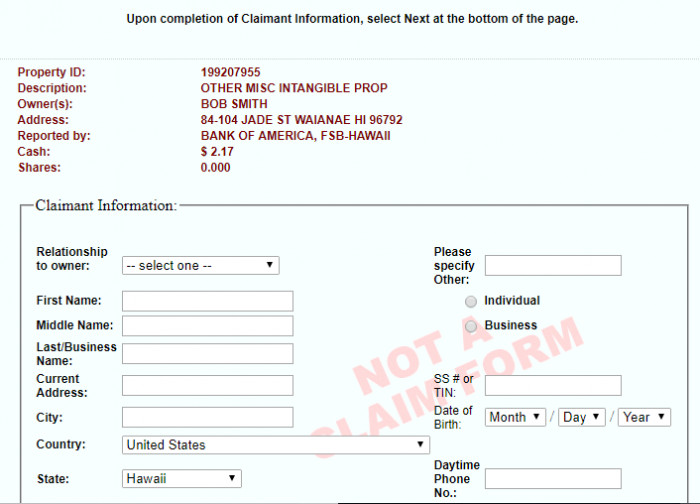 These results contain the property id number, a description of the property, the name of the owner or owners, the last known address for the owners, who reported the property, the amount of cash of the claim, and number of shares.
For each property you want to claim, you are asked to fill out the following claim form:
These results contain the property id number, a description of the property, the name of the owner or owners, the last known address for the owners, who reported the property, the amount of cash of the claim, and number of shares.
For each property you want to claim, you are asked to fill out the following claim form:
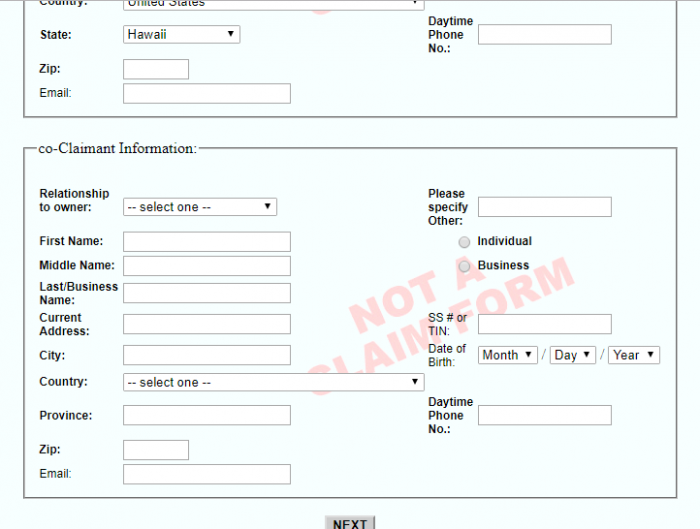
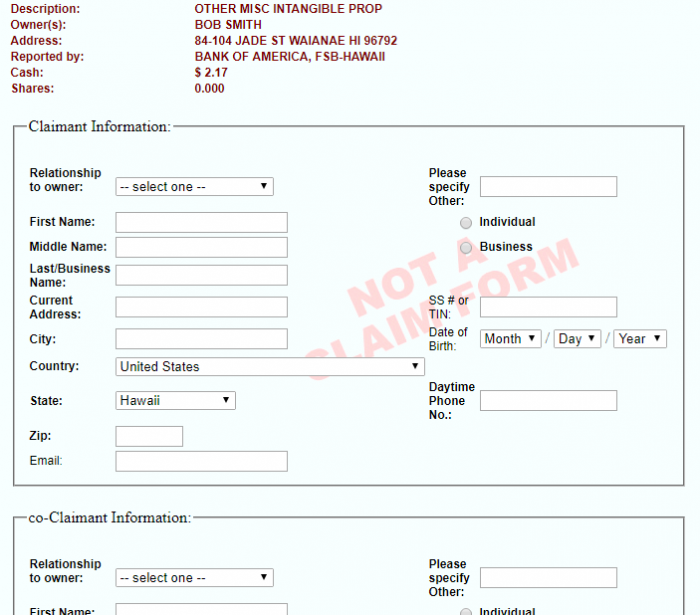 The claimant form asks for the claimant’s relationship to the owner, the claimant’s first name, the claimant’s middle name, and the claimant’s last name (the business name is requested instead of a last name if the owner or claimant is a business), the claimant’s current address, the claimant’s social security or tax ID number, the claimant’s date of birth, and contact phone numbers and emails. If there are co-claimants, then you are asked to fill out the same information for them in the co-claimant box:
Unclaimed Property Laws in Hawaii
The Hawaii Unclaimed Property Statutes are located in Hawaii Revised Statutes, Chapter 523A.Hawaii Unclaimed Property FAQ
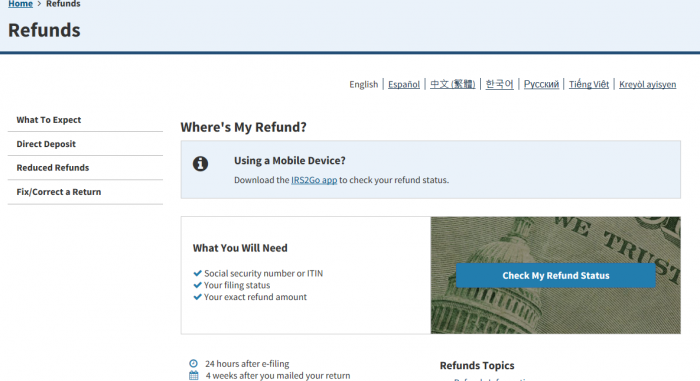
How long does Hawaii hold unclaimed property? Like many other states, Hawaii will hold unclaimed property for an indefinite period of time until the owners or their heirs can claim their property. Examples of Unclaimed Money Although unclaimed property can be just about any type of intangible personal property that is either already in cash or easily converted to cash, there are some types of property that are relatively likely to become unclaimed property. Some examples of this property include money in bank accounts, stocks, bonds, mutual funds, deposits, refunds, unpaid wages, unpaid insurance benefits, and the contents of safe deposit boxes. This list is not all inclusive, but just provides examples of different types of unclaimed money. Does the state of Hawaii make efforts to locate owners? Hawaii does not make extensive outreach efforts to locate owners, but you can search online for unclaimed property or call the local unclaimed property offices on each of Hawaii’s islands. Other sources to search besides Hawaii state database? When people begin their search for unclaimed property, they often mistakenly believe that they can only search in the state where they live and that will be enough to help them find any unclaimed property. It is important to realize that states have their own unclaimed property databases, and those databases are for people whose last known address was in that state. There are also federal level databases that have unclaimed property that might not ever be reported in a state database. That is why we suggest that most people running unclaimed property searches will need to look in multiple states and in several federal databases. To start your search, you want to begin by making a list of all of the states you need to search. At a minimum, you should check every state where you have resided as well as the state where you currently reside. For most people, we also suggest checking any states where anyone who may have put money in your name resides or resided. If you have established business contacts in other states, you should check those states as well. There are four national level sites that we suggest everyone search: the Internal Revenue Service (IRS), the Pension Benefit Guaranty Corporation, the U.S. Treasury, and the Life Insurance Policy Locator. The IRS is a major source of unclaimed property, in large part because the IRS will not forward IRS tax refund checks if they are undeliverable to the property owner. The policy is explained in depth at the IRS website: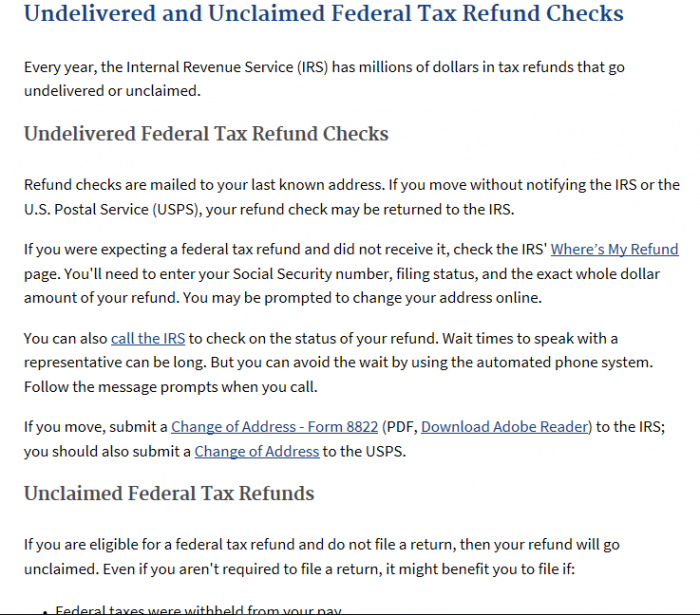 If you believe that you have an IRS refund that you have not received, you can search for it on the IRS’s Where’s My Refund? page.
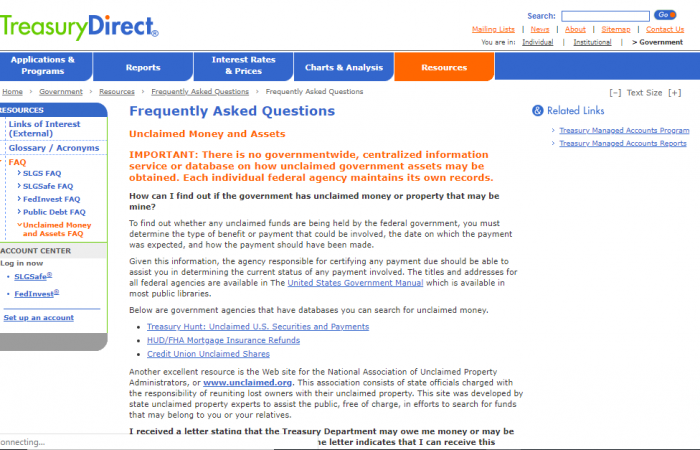
 In addition to the IRS, the US Treasury has custody of a lot of money for people in the US. In addition, it may not have current contact information for people because people often buy bonds for infants or children. It used to be easy to look for unclaimed bonds on the U.S. Treasury’s bond search database. They have discontinued this database. You can, however, still contact the US Treasury at 844-284-2676 or visit Treasury Direct for more information:
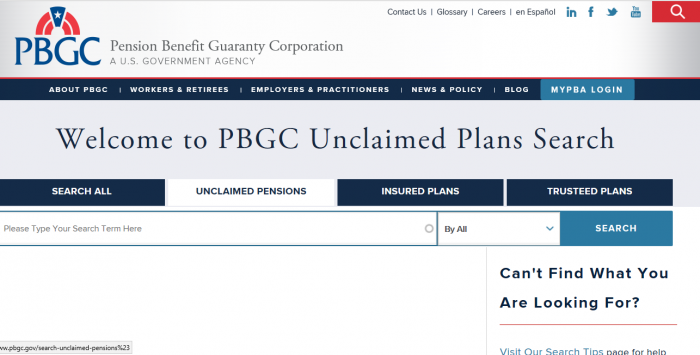
 An interesting potential source of unclaimed property is pension benefits. Because pensions have become significantly less common, many workers with pensions from early in their careers may not even realize that they have pension benefits. Fortunately, the Pension Benefit Guaranty Corporation (PBGC), a government organization that guarantees pension benefits in the U.S., runs an unclaimed pension database:
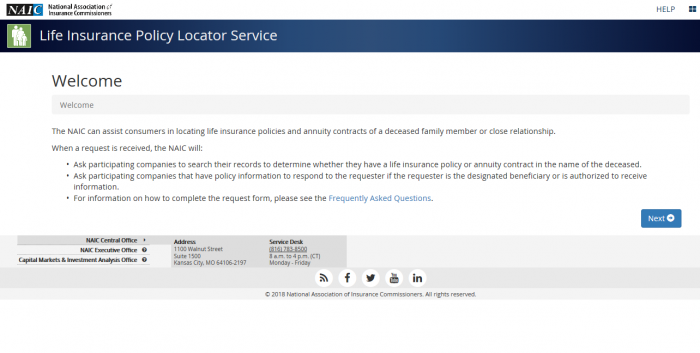
 The final national site that we suggest all people visit is the National Association of Insurance Commissioners’ Life Insurance Policy Locator Service. While it is not a federal government site, this national site is a conglomeration of life insurance policy companies. You can fill in your information, and they will distribute it to member organizations to see if you are the beneficiary on any unpaid life insurance claims held by their member agencies:
 There are some other sites that you might want to search if your individual circumstances mean that you had contact with these agencies. These four sites are: the FDIC, the Department of Housing and Urban Development, the National Credit Union Administration, and the Veterans Administration Benefits Department.
What is the best way prevent my property from becoming lost or unclaimed?
People want to know what steps they can take to keep their property from becoming unclaimed. The biggest thing is to keep thorough records of any property that you have. Account information should include the name of the holder, your account number, contact information, and any important due dates. If you have the option of selecting electronic account information, you should do so, because it makes it easier for you to remain in contact with your account holders.
How do I make sure my heirs know where my assets are if I die?
A will is not sufficient to inform your heirs of where your assets are located. We suggest that you designate a trusted individual with access to all of your account information in the event of your death or incapacitation.
Should I hire a finder to conduct the search?
Hawaii does not provide any guidance on whether or not a person should use a finder service to help find and claim unclaimed property. As with other states, unclaimed property searches in Hawaii are free. However, they can be time-consuming. You can choose to hire a finder, who will take a percentage of any money that they do manage to locate, and save the time in the search. It is a personal choice. You can find the rules for finder services in Hawaii Revised Statutes Chapter 523A-25.
Why does Hawaii take possession of unclaimed property?
Hawaii’s unclaimed property law is a consumer protection statute, which is aimed at reuniting property owners with their unclaimed/ abandoned property.
There are some other sites that you might want to search if your individual circumstances mean that you had contact with these agencies. These four sites are: the FDIC, the Department of Housing and Urban Development, the National Credit Union Administration, and the Veterans Administration Benefits Department.
What is the best way prevent my property from becoming lost or unclaimed?
People want to know what steps they can take to keep their property from becoming unclaimed. The biggest thing is to keep thorough records of any property that you have. Account information should include the name of the holder, your account number, contact information, and any important due dates. If you have the option of selecting electronic account information, you should do so, because it makes it easier for you to remain in contact with your account holders.
How do I make sure my heirs know where my assets are if I die?
A will is not sufficient to inform your heirs of where your assets are located. We suggest that you designate a trusted individual with access to all of your account information in the event of your death or incapacitation.
Should I hire a finder to conduct the search?
Hawaii does not provide any guidance on whether or not a person should use a finder service to help find and claim unclaimed property. As with other states, unclaimed property searches in Hawaii are free. However, they can be time-consuming. You can choose to hire a finder, who will take a percentage of any money that they do manage to locate, and save the time in the search. It is a personal choice. You can find the rules for finder services in Hawaii Revised Statutes Chapter 523A-25.
Why does Hawaii take possession of unclaimed property?
Hawaii’s unclaimed property law is a consumer protection statute, which is aimed at reuniting property owners with their unclaimed/ abandoned property.
Conclusion
Hawaii has over $150 million in its unclaimed property program. Run your search today and find out if anything is yours. how-to-find-unclaimed-money How to Find Unclaimed Money for FREE (Updated for 2024)
Table of Contents
- Hawaii’s Unclaimed Property Database
- What is Unclaimed Property?
- How Much Unclaimed Property in Hawaii?
- Hawaii Unclaimed Property Finder
- Unclaimed Property Laws in Hawaii
- Hawaii Unclaimed Property FAQ
- Conclusion
- What is Unclaimed Property?
- How Does Property Become Unclaimed?
- How Much Unclaimed Money is in the United States?
- Before You Begin
- How to Find Unclaimed Money
- Conclusion
- What is Unclaimed Money?
- The Scope of Unclaimed Money in Texas
- How to Locate Unclaimed Money in Texas
- Claiming Your Unclaimed Money in Texas
- Tips for a Successful Claim
- Preventing Unclaimed Money
- Conclusion
What is Unclaimed Property?
Unclaimed property generally refers to property where the owner has fallen out of contact with the person or organization that is the custodian of the property. Custodians of property include a variety of different organizations that might hold money in someone else’s name. Examples include banks and other financial institutions, stores, and storage rental facilities. Any property held by one of these custodians where the owner cannot be located may be considered unclaimed or abandoned property, though state rules vary on the types of property that are considered unclaimed for the purposes of their unclaimed property registers. Generally, there are two types of property that do not become unclaimed property for the purposes of those registers: real property (real estate) and motor vehicles. In addition, many state laws specifically address what happens to abandoned property left in rentals, both residential and storage facilities. For that type of property, it is generally forfeited to the landlord after a period of non-payment.How Does Property Become Unclaimed?
Property becomes unclaimed when the custodian of the property is unable to contact the owner of the property for a period of time that is listed in the relevant statutes for that state. For most states, the period of time is at least a year and some states require much longer periods of time before property is deemed to be unclaimed. You may also hear unclaimed property referred to as abandoned property, abandoned money, and unclaimed money. In most states, losing contact does not simply mean that the owner has not checked in with the custodian of the property, but requires the custodian to make an effort to contact the owner using the last available contact information provided by the owner. However, this is not the case in some states, where the burden of remaining in contact with the custodian remains on the property owner. The burden is a small one, however, as even checking an account online is considered contact with the custodian.How Much Unclaimed Money is in the United States?
While individual amounts of unclaimed money can range from few cents to millions of dollars, there are billions of unclaimed dollars in the United States. There is no central repository for all unclaimed money databases, though the National Association of Unclaimed Property Administrators (NAUPA) maintains links to most state and federal databases that have unclaimed property lists. Unclaimed Money provides an alternative to the NAUPA website and expands upon their official state databases with links to pension websites, life insurance websites, and federal databases that may not be available on the NAUPA website.Before You Begin
Many people find the process of trying to find unclaimed money for free daunting. The process is not difficult or challenging, but it can be time consuming and get tedious. That is why we recommend gathering the information that you will probably need to find and make your claims before you ever start searching. You may be searching for money in your name or in someone else’s name. For each subject of the search, gather a list of all known addresses, full names (including birth names, maiden names, married names, and aliases), social security number, birth date, places of employment, and any life insurance policy information you may have. Having this information will make it easier for you to locate unclaimed property.How to Find Unclaimed Money
You run a free unclaimed money search by searching various databases maintained by states, the federal government, and even private business organizations.State Searches
For most people, the search for unclaimed money begins at the state level. This may include the state where you reside, as well as any states where you previously resided. State law varies, but businesses in all states are required to send information about unclaimed money to state-run unclaimed property databases. You can find links to all of those databases on our website. In addition, you may be able to run a multi-state search on www.missingmoney.com, but be aware that not all states upload their information to that website. If you find money on the state’s database, you will be able to file a claim. During the claim’s process, the state will inform you of what type of proof is necessary to establish your claim.Federal Searches
There are some federal and private databases that may be holding unclaimed money for you, as well. Some of them are only a possibility if you have participated in certain groups or held certain jobs. Some of these organizations include: FDIC, the Department of Housing and Urban Development, the National Credit Union Administration, and the Veteran’s Administration Benefits Department . The Internal Revenue Service (IRS) process money for all taxpayers. If they are unable to get a refund to someone’s provided address, they hold it as unclaimed money. You can begin the process of tracking down unclaimed income tax return money on the IRS’s Where’s My Refund? page. The U.S. Treasury holds billions in unclaimed property, most of it in unclaimed savings bonds. They do not have a transparent database to help locate this property, but claims are still possible. You can find out more information by going to the U.S. Treasury website at Treasury Direct. Another federal database that can help people find unclaimed money for free is the Pension Benefit Guaranty Corporation (PBGC), which is a government-run corporation that guarantees individual private pension benefits. Some people have earned pension benefits and do not even realize that they have them. The Department of Labor is responsible for recovering back wages when employers break labor laws. You can search the DOL’s database of workers to see if you have money to be claimed. However, unlike many agencies, the DOL only holds unclaimed wages for a short period of time- three years. The U.S. Department of Veterans Affairs (VA) maintains a database for unclaimed VA insurance funds. These funds may be for beneficiaries, but potential policyholders should check it as well, since it may have rebates for them. This is only for VA policies; Servicemembers’ Group Life Insurance and Veterans’ Group Life Insurance are in separate databases. One non-government site to search is the National Association of Insurance Commissioners’ Life Insurance Policy Locator Service, which operates differently than many search databases. It is a group of life insurers and does not maintain a searchable database. Instead, you input search parameters and it distributes the information to its members’ insurance agencies, which will notify you if you have a possible match.Conclusion
As you can see, finding unclaimed property for free might be time consuming, but it is not difficult. Running a free unclaimed money search means doing a little research to discover where unclaimed money might be located, then methodically checking all of the applicable state, federal, and private databases that might have that money. Our individual state and federal guides can help you locate those databases and provide tips on how to streamline your search process. how-to-find-unclaimed-money-in-texas How to Find Unclaimed Money in Texas (and Claim it Today!)
Table of Contents
- Hawaii’s Unclaimed Property Database
- What is Unclaimed Property?
- How Much Unclaimed Property in Hawaii?
- Hawaii Unclaimed Property Finder
- Unclaimed Property Laws in Hawaii
- Hawaii Unclaimed Property FAQ
- Conclusion
- What is Unclaimed Property?
- How Does Property Become Unclaimed?
- How Much Unclaimed Money is in the United States?
- Before You Begin
- How to Find Unclaimed Money
- Conclusion
- What is Unclaimed Money?
- The Scope of Unclaimed Money in Texas
- How to Locate Unclaimed Money in Texas
- Claiming Your Unclaimed Money in Texas
- Tips for a Successful Claim
- Preventing Unclaimed Money
- Conclusion
What is Unclaimed Money?
Unclaimed money refers to funds or property that have become separated from their rightful owners over time. This can occur through forgotten bank accounts, uncashed checks, security deposits, insurance policies, and more. When these assets go unclaimed for a certain period, typically one to three years, they are turned over to the state's unclaimed property division, awaiting to be claimed by their owners or heirs.The Scope of Unclaimed Money in Texas
Texas, being one of the largest states in the U.S., holds billions of dollars in unclaimed property. From dormant savings accounts and unclaimed payroll checks to forgotten utility deposits and insurance benefits, the range of unclaimed assets under the Texas Comptroller’s custody is vast and varied.How to Locate Unclaimed Money in Texas
Start with the Texas Comptroller's Website
The first and most crucial step in your quest for unclaimed money is to visit the Texas Comptroller's official website dedicated to unclaimed property (ClaimItTexas.org). This user-friendly platform is your gateway to discovering whether you have unclaimed assets in the state.Conducting a Search
Personal Search: Enter your name or the name of your business in the search bar. It's advisable to start broad, using just a last name or business name, to capture all potential matches. Family Search: You can also search for unclaimed money that may belong to deceased relatives, potentially inheriting assets you were unaware of.Expand Your Search Beyond Texas
Unclaimed money isn't limited to state boundaries. It's possible that you have unclaimed assets in other states or at the federal level.Other States
Use the National Association of Unclaimed Property Administrators' (NAUPA) website to search other states where you or your relatives have lived, worked, or conducted business.Federal Agencies
Several federal agencies hold unclaimed money, including:- IRS for unclaimed tax refunds
- U.S. Treasury for undelivered checks and matured bonds
- FDIC for unclaimed insured deposits from failed financial institutions
Identifying Your Claims
Upon locating potential unclaimed assets in your name, carefully review the details. Each listing will provide key information, including the name on the account, the last known address, and the type of property. Identifying which claims belong to you or your relatives is crucial for a successful claim.Claiming Your Unclaimed Money in Texas
Once you've identified unclaimed money in Texas that belongs to you, the next step is to file a claim and prove your ownership.Step 1: Filing a Claim
On the Texas Comptroller's unclaimed property website, you can file a claim electronically for most properties. For each claim, you'll need to provide:- Your current personal information
- Details about the claim you're making
Step 2: Providing Proof of Ownership
To successfully claim your unclaimed money, you must prove your identity and, in some cases, your relationship to the original owner of the assets. This may require submitting:- A valid photo ID (e.g., driver's license or passport)
- Proof of Social Security number (e.g., Social Security card or tax document)
Step 3: Submitting Your Claim
After gathering the necessary documents, submit your claim through the website or by mail, depending on the instructions provided. The Texas Comptroller's office will then review your claim, which can take several weeks to several months, depending on the complexity of the claim and the volume of claims being processed.Step 4: Receiving Your Funds
Once your claim is approved, you will receive your unclaimed money through a check mailed to the address you provided. In some cases, if the unclaimed property is stocks or bonds, you may receive these assets directly.Tips for a Successful Claim
Be Thorough: Ensure you've searched all variations of your name, including maiden names or aliases. Follow Up: Keep track of your claim's status through the Texas Comptroller's website or by contacting their office directly. Stay Patient: The process can be lengthy, especially if there are complications or a high volume of claims.Preventing Unclaimed Money
While claiming unclaimed money can be a pleasant surprise, it's also important to take steps to prevent your assets from becoming unclaimed in the first place. Keep Records Updated: Regularly update your contact information with banks, employers, and other institutions. Track Your Assets: Maintain a record of all accounts, policies, and deposit boxes. Communicate with Family: Share information about your assets with trusted family members or advisors.Conclusion
Unclaimed money in Texas represents a vast reservoir of financial opportunity for individuals and families alike. By taking the initiative to search, claim, and take preventative measures, you can ensure that you and your loved ones fully benefit from what is rightfully yours. Remember, the journey to claiming unclaimed money is one of patience and diligence, but the rewards can be significant. Start your search today, and you may just discover a hidden treasure waiting to be reclaimed.Search Unclaimed Money in Other States
Looking for unclaimed money in a different state? Browse all 50 states below to find unclaimed property in your area.
ALAlabamaAKAlaskaAZArizonaARArkansasCACaliforniaCOColoradoCTConnecticutDEDelawareFLFloridaGAGeorgiaIDIdahoILIllinoisINIndianaIAIowaKSKansasKYKentuckyLALouisianaMEMaineMDMarylandMAMassachusettsMIMichiganMNMinnesotaMSMississippiMOMissouriMTMontanaNENebraskaNVNevadaNHNew HampshireNJNew JerseyNMNew MexicoNYNew YorkNCNorth CarolinaNDNorth DakotaOHOhioOKOklahomaOROregonPAPennsylvaniaRIRhode IslandSCSouth CarolinaSDSouth DakotaTNTennesseeTXTexasUTUtahVTVermontVAVirginiaWAWashingtonWVWest VirginiaWIWisconsinWYWyoming